
Golf in the Scottish Highlands: Courses, Regions and Trip Ideas
COURSES · REGIONS · ITINERARIES · HIGHLAND GOLF TRAVEL
PLANNING A GOLF TRIP TO THE SCOTTISH HIGHLANDS
The Scottish Highlands offer one of the most rewarding settings for a golf trip in Scotland. Celebrated championship links sit alongside traditional town courses, remote nine-hole layouts and scenic inland clubs, with mountains, coastlines and historic communities forming part of the journey between rounds.
Royal Dornoch, Nairn and Cabot Highlands may be the best-known names, but they represent only part of the region’s golf. Travelling further north or west introduces golfers to quieter courses where the setting and sense of discovery can be every bit as memorable as the scorecard. For those willing to add a ferry journey, the Highlands can also become the starting point for an unforgettable island golf adventure.
This guide explores the principal golfing areas of the Highlands, the courses that can be combined within each region and some practical ways to build a three, five or seven-day trip.
WHY THE HIGHLANDS WORK SO WELL FOR A GOLF TRIP
A Highlands golf trip provides variety without losing a strong sense of place. On the east coast, golfers can experience established championship links and traditional coastal clubs. Inland, the courses around the Cairngorms and Speyside offer tree-lined fairways, heathland characteristics and mountain views. Farther north and west, smaller clubs deliver a more remote and informal style of Scottish golf.
The journey is also part of the experience. Routes between courses pass through fishing villages, open moorland, whisky country and some of Scotland’s most dramatic landscapes. It makes the Highlands particularly well suited to golfers who want their trip to feel like more than a sequence of tee times.
CHOOSING WHERE TO PLAY
The Highlands cover a large geographical area, so it is better to plan a trip around one or two connected regions than to select courses purely from a ranking list. Inverness and Nairn work well as an accessible starting point, while Dornoch provides a natural second base for golf around the Dornoch Firth and Sutherland.
Golfers with more time can extend the journey into Caithness, the far north, the Cairngorms, the west coast or the Outer Hebrides. These areas require more travel and planning, but they also reveal a quieter side of Scottish golf.
GOLF AROUND INVERNESS, NAIRN AND THE MORAY FIRTH
The area around Inverness and Nairn is one of the easiest introductions to Highland golf. It combines excellent transport connections with several distinctive courses close enough to create a varied short break.
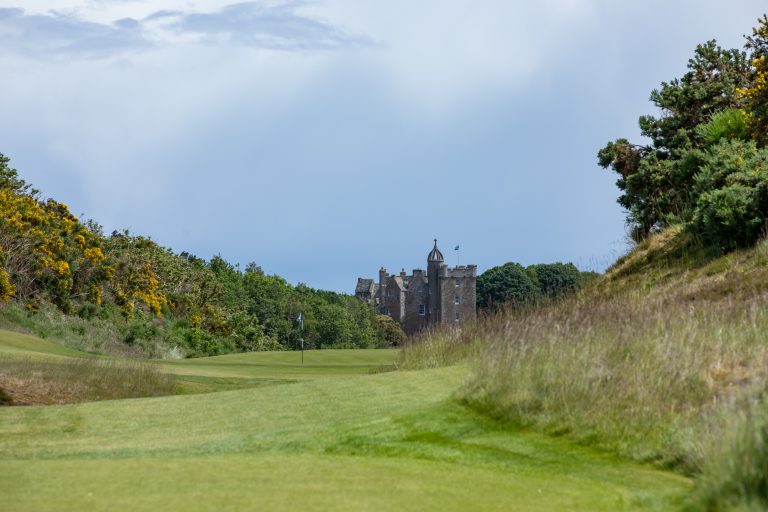
Cabot Highlands is home to Castle Stuart Golf Links and Old Petty, giving visiting golfers two different courses at one destination. Castle Stuart follows the shoreline of the Moray Firth with wide playing corridors, bold green complexes and views towards the Black Isle. Old Petty adds another reason to make Cabot Highlands a central part of a regional itinerary.
Nairn Golf Club is another of the area’s leading links, with the opening stretch running close to the Moray Firth. Nairn Dunbar offers an additional links option nearby, while Inverness Golf Club provides a contrasting inland round.
Across the water, Fortrose and Rosemarkie Golf Club occupies a memorable position on Chanonry Point. Its compact layout, coastal views and historic character make it a useful addition to a trip based around Inverness.

GOLF AROUND THE DORNOCH FIRTH AND SUTHERLAND
Royal Dornoch is the headline course in the northern Highlands and a destination that many golfers build an entire trip around. Its natural links terrain, raised greens and setting above the Dornoch Firth have made it one of Scotland’s most admired golf experiences.
The surrounding courses deserve time as well. Tain Golf Club provides traditional links golf on the opposite side of the firth, while Golspie moves between links, heathland and parkland characteristics during the same round. Brora Golf Club continues the journey north with classic links features, coastal views and a wonderfully natural feel.
Together, these courses create a strong multi-day itinerary without requiring a different hotel every evening. Staying in or around Dornoch gives golfers time to experience the town and allows the trip to move at a more relaxed pace.

GOLF IN THE CAIRNGORMS AND SPEYSIDE
Not every Highlands golf trip has to follow the coast. The courses around the Cairngorms and Speyside provide a different landscape, with mature trees, heather, rivers and mountain backdrops replacing dunes and sea views.
Boat of Garten is one of the best-known courses in this part of Scotland, while Grantown-on-Spey, Kingussie and Newtonmore can be combined into an enjoyable inland route. These clubs generally offer a welcoming and less hurried experience, making the area particularly appealing to golfers interested in traditional Scottish clubs beyond the championship circuit.
Speyside also makes it easy to combine golf with distillery visits and local food and drink. It can work as a dedicated short break or as a connecting stage between the Moray Firth and other parts of the Highlands.
GOLF IN THE FAR NORTH AND CAITHNESS
Continuing north introduces golfers to courses that feel increasingly remote. Reay Golf Club is a traditional links on Scotland’s north coast, while Wick Golf Club provides another historic coastal round in Caithness.
Durness Golf Club is one of the most distinctive nine-hole courses in Scotland. Its clifftop setting and views over the surrounding beaches make it an experience shaped as much by the landscape as the golf itself.
These courses are best included within a slower touring itinerary. The distances involved make rushed day trips less appealing, but golfers prepared to stay locally are rewarded with quieter fairways, dramatic scenery and a strong sense of having travelled somewhere different.
GOLF IN THE WEST HIGHLANDS AND SKYE
The west coast offers another interpretation of Highland golf. Courses such as Gairloch, Ullapool, Traigh and the Isle of Skye are smaller in scale than the major championship venues, but their locations make them memorable additions to a wider journey.
Golf here is often informal, scenic and closely connected to the surrounding community. Conditions can change quickly, and travel takes longer than a map may suggest, so flexibility is important. For golfers combining the sport with landscape photography, walking, food or island travel, however, the west can become one of the most rewarding parts of the trip.
Fort William can also provide a useful stopping point when connecting the west coast with central Scotland or the Cairngorms.
EXTENDING A HIGHLANDS GOLF TRIP TO THE ISLANDS
For more adventurous golfers, adding a ferry journey can turn a Highlands itinerary into a once-in-a-lifetime island golf trip. The travel becomes part of the experience, with sea crossings, changing landscapes and remote communities creating a very different rhythm from a conventional golf break.
The Outer Hebrides provide a particularly strong island route. The courses at Stornoway, Harris, Benbecula, Askernish on South Uist and Barra each offer their own character and setting. Askernish is the best-known of these courses, with its natural links landscape on the machair, but the real appeal lies in combining several contrasting island clubs within one journey.
Skye can act as a gateway to the Outer Hebrides, while mainland ferry connections also make it possible to shape the trip around the courses and islands that matter most to the group. This is not an itinerary to rush. Ferry times, vehicle reservations, accommodation and changing weather all need to be considered, with at least one flexible day built into a longer trip.
An island golf journey will not suit every first visit to Scotland, but for golfers seeking some of the country’s most remote and distinctive courses, it can become the part of the trip they remember most.
WHERE TO BASE YOURSELF
Inverness or Nairn
Inverness provides the widest choice of accommodation and transport connections. Nairn offers a quieter coastal base with two courses in the town and straightforward access to Cabot Highlands, Inverness and the Black Isle.
Dornoch
Dornoch is the natural base for Royal Dornoch, Tain, Golspie and Brora. Staying for two or three nights reduces unnecessary driving and gives visitors time to enjoy the town beyond their round.
A multi-centre Highlands trip
For five days or longer, dividing the trip between Nairn or Inverness and Dornoch usually works better than returning to one base each evening. Golfers heading to Caithness, Durness or the west coast should add another overnight stop rather than treating these areas as quick excursions.
An island extension
An Outer Hebrides extension should be treated as a separate stage of the trip, with accommodation booked on the islands and enough flexibility around ferry travel. Trying to add an island round as a quick day trip would remove much of what makes the experience worthwhile.
HOW LONG SHOULD YOU STAY?
Three golfing days are enough for a focused first visit based around Inverness and Nairn. Five days allow the trip to extend to Dornoch and Sutherland without making every day feel rushed. Seven days provide time for a broader touring route or a rest day between rounds.
When setting the schedule, it is worth allowing space for travel, changing weather and time at each club before or after the round. One course per day is often the most enjoyable pace, particularly when photography, sightseeing or longer lunches are part of the experience.
SAMPLE HIGHLANDS GOLF ITINERARIES
Three-day Highlands golf trip
Day one: Castle Stuart Golf Links at Cabot Highlands
Day two: Nairn Golf Club
Day three: Royal Dornoch Golf Club
This is a strong introduction for golfers who want to experience three leading Highland links while keeping the route straightforward.
Five-day Highlands golf trip
Day one: Castle Stuart Golf Links
Day two: Nairn Golf Club
Day three: Royal Dornoch Golf Club
Day four: Brora or Golspie Golf Club
Day five: Old Petty at Cabot Highlands or Fortrose and Rosemarkie
This itinerary combines the main courses with one of the region’s traditional clubs and works particularly well with bases in Nairn and Dornoch.
Seven-day Highlands touring trip
Day one: Castle Stuart Golf Links
Day two: Nairn Golf Club
Day three: Tain Golf Club
Day four: Royal Dornoch Golf Club
Day five: Golspie or Brora Golf Club
Day six: Reay Golf Club
Day seven: Durness Golf Club or a non-golf travel day
The seven-day option turns the golf trip into a wider Highland journey. It is best approached with flexible travel plans and accommodation booked in more than one location.
For an island-focused journey, use a separate itinerary built around ferry connections and two or more nights in each part of the Outer Hebrides rather than adding the islands to this mainland route.
WHEN IS THE BEST TIME TO VISIT THE HIGHLANDS FOR GOLF?
The main golf-travel season generally runs from spring into early autumn. Late April and May can bring long daylight hours and courses emerging into excellent condition, often before the busiest summer period.
June, July and August provide the longest days and the greatest flexibility for later tee times, although popular courses and accommodation can be in high demand. September and early October can offer attractive light and a quieter atmosphere, but shorter days need to be considered when arranging travel and photography.
Highland weather can change quickly at any point in the season. Building some flexibility into the itinerary is more useful than trying to predict conditions too precisely months in advance.
GETTING AROUND THE HIGHLANDS
A car, private driver or organised golf transfer is usually the most practical way to travel between Highland courses. Inverness is the main arrival point for many visitors, with road and rail connections to other parts of Scotland and an airport close to several of the Moray Firth courses.
Travel times should not be underestimated. Roads become slower in the far north and west, and scenic stops can easily extend a journey. Avoid placing a distant course immediately after an early arrival or before a fixed departure. A well-paced route will leave enough time to enjoy both the golf and the places between rounds.
For island travel, check the appropriate ferry route and current sailing information before finalising tee times or accommodation. Vehicle spaces should be reserved in advance, and the itinerary should retain some flexibility in case conditions affect the crossing.
MORE THAN JUST THE GOLF
The Highlands are particularly suited to groups with interests beyond the course. Distilleries, castles, coastal villages, wildlife, local food and mountain scenery can all form part of the itinerary.
These additional experiences are also useful when not every traveller wants to play each day. A distillery visit, scenic drive or free afternoon can make the trip more balanced while still keeping golf at its centre.
GOLF TRIP PHOTOGRAPHY IN THE HIGHLANDS
A Highlands golf trip often represents months of planning and may include courses that a group has hoped to play for years. Professional photography provides a record of the complete experience: the landscape, action, individual portraits, group photographs and smaller moments shared throughout the round.
AKH Golf is based in the north of Scotland and regularly photographs golfers at courses across the Highlands. Coverage is designed to fit around the pace of play, allowing the group to enjoy the round while receiving a varied collection of professionally edited images afterwards.
MORE HIGHLANDS GOLF TRIP GUIDES AND STORIES
Continue planning your Scottish Highlands golf trip with these related guides, course features and photography stories.


PLANNING A GOLF TRIP TO THE SCOTTISH HIGHLANDS?
If you are arranging a golf trip to the Highlands and would like the experience professionally photographed, tell me where you are playing and what you would like captured. Coverage can be planned around one round or incorporated into a wider Scottish golf itinerary.